
Sutter Parole or Probation
Sutter County has two main supervision tracks that readers often mix together. County probation and PRCS are local. State parole is CDCR. BPH is the state parole-hearing and parole-eligibility body for CDCR cases, not the office that supervises an ordinary county-jail probationer.
| Supervision type | Who supervises | How to verify |
|---|---|---|
| County probation | Sutter County Probation Department | Sutter court sentencing order, probation office contact, and case record |
| Mandatory supervision | County-level supervision after a local sentence | Sentencing order and probation contact |
| PRCS | County supervision after certain prison releases | Court/CDCR paperwork and Sutter County Probation |
| State parole | CDCR Division of Adult Parole Operations | CDCR/DAPO office, parole paperwork, and BPH records when relevant |
| Federal supervised release | U.S. Probation through federal court | Federal court docket and federal supervision documents |
- Parole
- Supervision after a state-prison release, usually through CDCR DAPO in California.
- Probation
- A court-ordered county supervision term that may follow jail, a local sentence, or a suspended sentence.
- PRCS
- Postrelease community supervision, a county-supervised status for some people leaving state custody.
- Absconder
- A person alleged to have stopped reporting or left supervision without approval.
Verify Sutter Supervision
There is no broad public Sutter probation name-search feed in the research. The reliable public route is the court case, the sentencing or probation order, direct office contact when appropriate, and CDCR resources for state parole. The Sutter County released inmates search path should be used first when the basic release itself is still unclear.
- Search the Sutter Superior Court case for sentencing, probation, PRCS, violation, warrant, or discharge entries.
- Confirm whether the person left county jail, CDCR, BOP, or another system.
- Contact Sutter County Probation for county probation, mandatory supervision, or PRCS questions that are appropriate to verify.
- Use CDCR DAPO contacts for state parole, not the county probation office.
- Check BPH schedules or results when a CDCR parole-suitability case is involved.
Sutter County Supervising Office
Sutter County Probation publishes a local Adult Probation & Adult Resource Center for adult supervision. That office is the local contact point for adult probation, PRCS, and related county supervision questions. It should not be confused with CDCR DAPO parole offices.
595 Boyd Street
Yuba City, CA 95991
Phone: (530) 822-7320
Fax: (530) 822-7470
Monday-Friday, 8:00 a.m.-5:00 p.m., except holidays
The probation page also provides a monthly report form and an email route for monthly reports. That is a supervision-administration detail, not a public name lookup. Use a case number and a purpose-neutral question when contacting the office.
Warrants and Absconders
Warrant and absconder information is split by system. Sutter Superior Court records can show bench warrants and failures to appear in local criminal cases. The Sutter criminal division page says that once a bench warrant has been issued, the person must surrender to a law-enforcement agency, and represented people should contact their attorney. Sutter County Probation did not surface a general public absconder list in the reviewed materials.
For CDCR parole, CDCR contact pages point users to Adult Parole Offices & Units and GPS Alerts/Wanted Sex Offenders resources. Those are state parole resources, not county probation pages. VINE can help with custody changes if a supervision issue leads to jail custody, but VINE is not a probation-conditions database.
How Sutter County Supervision Ends
Supervision ends by discharge, court order, expiration, revocation, transfer, or another system-specific event. A county probation discharge should be checked through the Sutter court case and probation records. A parole discharge belongs to CDCR, DAPO, or BPH records, depending on the question. A federal supervised-release term belongs to federal court and U.S. Probation.
When a release record needs to show both custody release and supervision status, collect both records. The jail release record answers when Sutter custody ended. The court, probation, CDCR, or federal record answers whether supervision remained afterward.
Sutter Reentry Education
Sutter County Adult Education says it contracts with Sutter County Probation and Sutter County Jail to provide educational services to interested adult participants. It lists High School Diploma, High School Equivalency Certificate or HiSET, and Adult Basic Skills pathways. That is useful after release because it points to a local program connected to jail and probation, but it is not a supervision-verification record.
The Sutter County Adult Education jail and probation education page shows the local program connection.
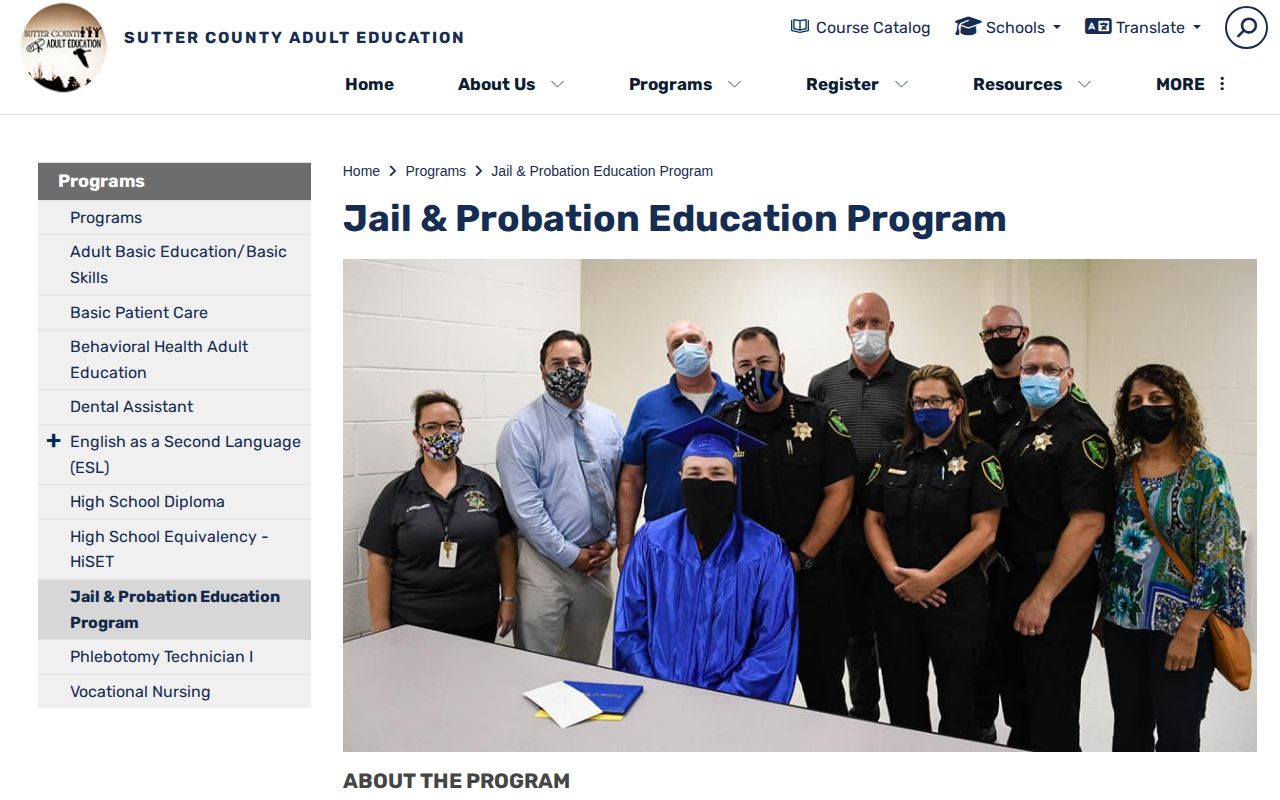
Use program information for navigation and reentry planning, not as proof of custody or supervision status.
CDCR Parole Offices
A state-prison release to parole is supervised by CDCR DAPO. The CDCR Northern Region directory lists regional offices, including a Northern Region headquarters in Sacramento and units in Sacramento Metro, Stockton, Chico, Red Bluff, Redding, Woodland/Vallejo, and other locations. Sutter County does not map to a single public parole unit in the research, so the exact office should be confirmed through CDCR, parole paperwork, or the parole agent.
The CDCR DAPO Northern Region directory is the state parole-office reference for Northern California.
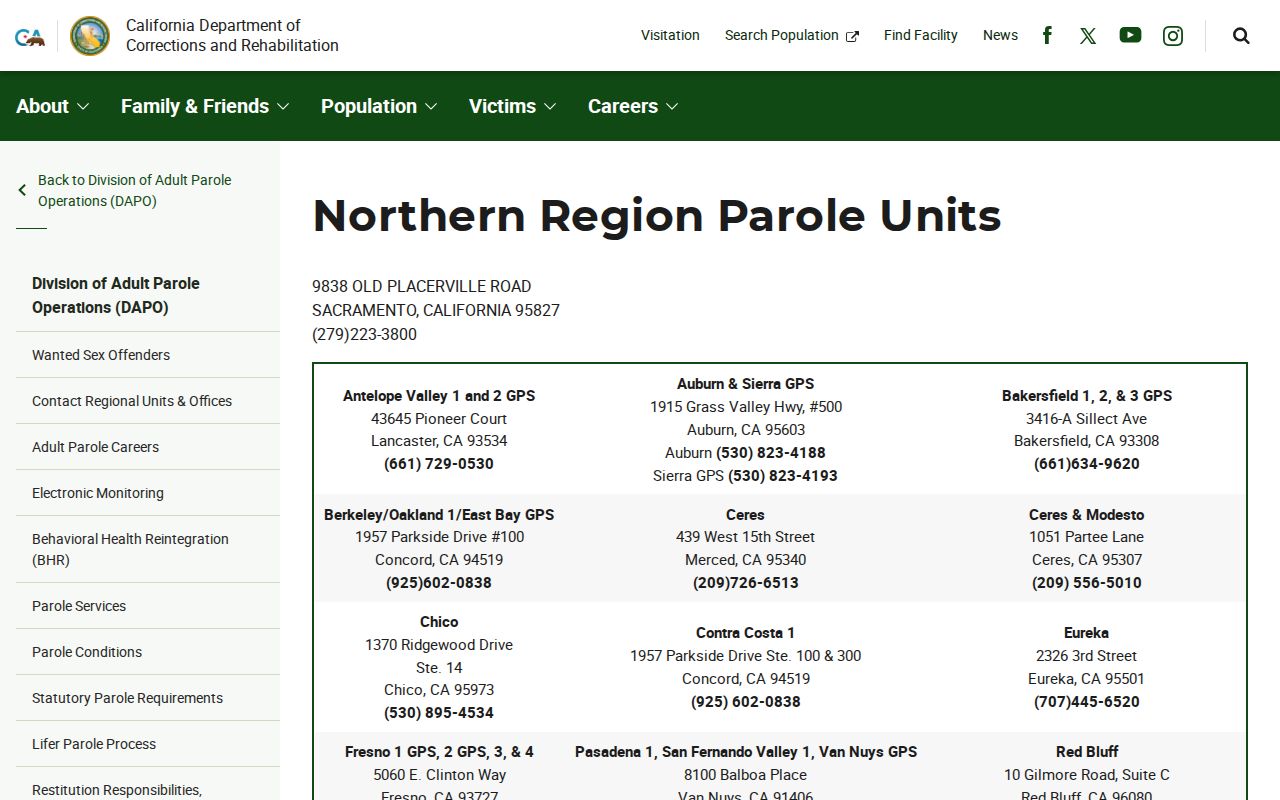
Use CDCR parole contacts only for state parole. County probation questions stay with Sutter County Probation and the local court record.
Release Property and Reporting
Sutter's release-procedure facts can affect first-day reporting. The jail returns property at release and issues remaining account balances by check from the prisoner's cash fund. Property left more than 90 days after release is destroyed or otherwise disposed of. A person going to state prison can release property before transport by signed and staff-verified request, with valid photo ID from the designee.
Those details do not prove supervision status, but they help explain the transition from custody to reporting. A person leaving jail may need identification, paperwork, property, money, and the court order that states probation, PRCS, or reporting requirements. Confirm the supervision obligation through the court order or supervising office, not through property-release paperwork alone.